Check out my food blog!

14 December, 2009

Drifting (Episode Two: Tiznit, Home, and Rabat)

One evening in crowded center of Marrakech will enchant you, leaving you exhausted and wanting more. A second day will break the spell. Spending any more time than that will only irritate you. We took full advantage of our time in the magical city- buying handcrafted goods, visiting the obligatory souqs and stalls, making friends and drinking tea with vendors, and even crossing the path of a well-known actress currently filming the "Sex in the City" sequel movie- but when the time came to say goodbye, we were ready. And though it was fun to experience the more extravagant and free-spirited tourist lifestyle in Morocco, by far the most rewarding moments in Marrakech occurred when I connected to the local people in ways that only a PCV can. Seeing people's eyes light up when they realized we were speaking to them in TashlHite was priceless. And I was fascinated to find myself in arguments with people whose racism ferments deep hatred for the Berbers of Morocco, a people they insist are irreligious and barbaric. I may not have changed their minds, but I felt more like a local, and more like a Berber than ever before, arguing for the equal rights and respect of Morocco's indigenous inhabitants. So, while it was hard to say goodbye to Denise and Amber who were headed to Fez for more fun-filled city exploration, it was with pleasure that I put my volunteer hat back on, and headed back to the bled.

From Marrakech I took a bus to Agadir, where I met Jess and Marge from my CBT group. Together we took a taxi a bit further south down the coast, to their stomping grounds of Tiznit.

The Tiznit Provence is known for its vast silver market, its exotic argan nuts (supposedly grown nowhere else in the world), its conservative religious tendencies, and its lack of work (which correlates directly to a lack of males, most of whom travel elsewhere for employment). As result, only female Peace Corps volunteers are sent to the region and the area is affectionately referred to as "the convent". It was, therefore, with great caution and stealth that I smuggled myself into Jess's house, where we spent the evening making Thai food and watching movies. Early the next morning we exited Jess's village with equal surreptitiousness, returning to the casual, sunny city of Tiznit (Tiznit's sleepy beach community atmosphere reminds me of a very young San Diego). There we spent hours wandering the bright dusty streets witnessing what seemed like miles of silver shops. We ate delicious harsha (like flat corn bread) with honey and melted butter, in a cafe whose impressive display of pastries was improved by the constant buzzing of bees attracted by sugary glazes. We visited the two major Tiznit tourist attractions; the iconic adobe mosque spiked with logs, which supposedly help spirits climb to heaven; and the original city spring, steeped in legend and sadly mistreated. And before I left, we played Marge's recently purchased "Moroccan Monopoly", with property names, train stations and utility companies that we recognized from around Morocco! My only complaint was that the all-important "souq" was not represented on the board.... oh and the "chance" cards, sadly, were in French.

The next morning I left Tiznit on an early bus, and arrived home, just before dark, to a bitter-sweet homecoming. I felt homesick and missed my community, but I also sensed that my extended absence had distanced me from my neighbors and friends. Also, my language was out of practice, and Amber's absence (she was still away in Fez), made the house lonely and complicated my ability to reengage friendships with community members, particularly women (As you may have gathered, Moroccan culture does not openly accept friendships between people of the opposite sex. Any relationship between a man and a woman who are not related is assumed to be sexual. Of course, this varies from region to region, and is much less true in bigger cities. In our town it is okay to have mixed friendships if you are married, as long as the married couple is together. I doubt that I could even have a tutoring lesson with our female tutor without Amber present).

I moped around the house without direction, making very little contact with the community and inadvertently addicting myself to episodes of "Mad Men" (more on this later hopefully), before finally deciding to focus. By the time Amber returned, I had mentally reinvented my approach to working, and I was redoubling my efforts to assimilate in the community. Soon things started looking up. We had some really great interactions with people in the community, our language was seemingly on the rise again, and we were encouraged. Together we decided that the best thing for us to do, both for our sanity and for the sake of our work, was to stay firmly planted in our community for a length of time, and avoid further travel. I don't know if this is a Morocco thing or a Peace Corps thing, but the life we lead here is one of constant contradiction. Within days of our resolution to remain stationary, we were told that we would need to travel, with only one days notice, to Rabat for the weekend.

Entrusting keys and cat to our lovely neighbors, we begrudgingly made our way back to Marrakech, where we quickly caught a train to Rabat. Despite our misgivings about traveling, I was excited for the opportunity to take the train, which seem to be an elusive and luxurious form of travel compared to the souq buses we normally employ to traverse the countryside. At the very least, the path of a train promised less severe curves and was therefore less likely to cause nausea. Also, I discovered the added benefit that you can get up and wonder the halls when you are bored or need to stretch your legs. By the time we arrived in Rabat, although still plagued by the guilt of impermanent progress in my site, my ire had dissolved to mild indignation, which over the course of the weekend, would be overcome by the soothings of Rabat.

(learn what makes Rabat such a great city and why the chicken crossed the road in the next riveting installment soon to come)
09 December, 2009

Drifting (Episode One: Marrakech)

Life in small town Morocco has recently expanded it boarders. I fall in and out of sleep pondering where I am. A hotel in Rabat? A fellow PVC's living room floor? A kasbah in Taznght? Marrakech? Tiznit? A train?
The blurring of time and space began about a month ago when Amber and I left for training in Marrakech. We met up with a gaggle of volunteers for an evening in the city of Ourzazate before splintering into various travel groups heading to different Halloween parties scattered about southern Morocco. Amber and I attended a party held at a breathtaking, meandering casbah, with a beautiful garden entrance, candles lining the stairs, tasteful painted trim around doors and windows, and hanging plants adorning the multi-level courtyard. As the sun set on the adobe village, the din of costumed Americans, chatting, dancing, and preparing refreshments, echoed off the ancient mud walls.
The next morning we woke early, and walked the mile or so across low fields to the main road where we caught a transit to a bus station. Soon, we were making our way up one of the most difficult passes in Morocco winding through the Middle Atlas Mts. towards Marrekech. We arrived in Kech some 5 hours later and chose the least pushy of the taxi drivers accosting us as we exited the bus station to take us to our training hotel. The hotel was a bit outside the central tourist sections of Marrekech, surrounded by newly built suburban complexes and mellow streets. And since I didn't really venture further than the neighborhood pizzeria for the first week, this was my first, albeit naive, impression of Marrakech.
Training flew by. We told stories, exchanged ideas, problem-solved, worked in groups, listened to presentations and enjoyed the quality food and company. In the evenings, nightly potlucks formed in the shared bungalows, complete with kitchen, where unmarried volunteers stayed (married couples were accommodated in tradition hotel rooms). After dinner, people hung out around music circles, caught up with their email in the lobby, grabbed taxis to the city, or took advantage of the hotel's showers and hot water. All in all, a very relaxing and rejuvenating week- much needed for the weeks to come.
We checked out of our hotel Saturday morning and headed to the Kech airport where we picked up Amber's mother. We dropped our bags at a fun riyad buried in the winding alleys sprouting from the edges of the famous Jmaa Al'Fna. And there, for the first time, we hung up our volunteer hats, instead donning tourist hats, and walked out to the busy square. As promised by tourist magazines and travel books, Jmaa Al'Fna was bursting at its mortar seams with rich foods, extravagant spectacles, and unique scents and sounds. Lined stalls of nuts, and dried fruits sold by the kilo. Orange juicers shouting invites in numerous languages from behind their carefully stacked citrus pyramids. Tea vendors standing next to karts with large copper kettles steaming in the cool night air, pouring glass after glass of piping hot spiced tea, sweet and pungent, like liquid cinnamon. Women sitting on wooden crates offering to paint intricate henna designs on the hands and feet of passers-by. Whirling dancers accompanied by drummers and men playing long droning brass trumpets, high-pitched but hollow, as if muffled by history. Snake charmers blowing penny whistles and prodding hissing snakes, putting cigarettes between their long fangs. One man brought his thick snake and hung it around my neck. "You take picture! You have camera?" I told him in TashlHite, "Excuse me, but I don't have a camera". He gingerly removed the snake suggesting I come back later. "Encha'llah"(god willing), I said.

(Check soon for the next evocative installment of "Drifting" in which I part ways with Amber and Denise and head south to the beaches of Tiznit)

04 November, 2009

Holy Hillary!


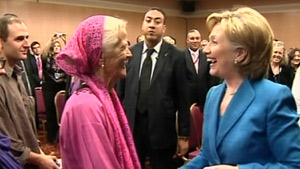
In an amazing stroke of luck, not only did we find ourselves training in Marrakesh at the same time as Hillary Clinton, but she actually found the time to meet with us between sharing copious glasses of tea with leaders from around the world. In fact, thanks to our friend Muriel (the oldest currently serving Peace Corps volunteer in the world), the story was picked up by CNN and other news organizations. Check out the story at http://www.cnn.com/2009/WORLD/africa/11/03/morocco.us.peace.corp.senior/index.html . I'll try to post a more expansive explanation of time here in Marrakesh, as time allows.

30 October, 2009

Pictures!

So you may have noticed that you recognize some of the people on the slide show to the right. That is because I finally got round to uploading all the pictures we've taken in Morocco. You can sit back and enjoy the show here on my blog page, or if you click on it, you will be brought to my picasa web page so that you can browse all the pictures at your leisure. Happy viewing!

19 October, 2009

Additional Blog Notes...


First of all, I would like to introduce you to Igli, our angsty and entertaining adolescent cat. Also, I want to point out that I have been behind on my posts so below are three posts which I added at the same time. Just didn't want anyone to miss them. Finally, I'm happy to report more recordings being showcased on the MySpace account: http://www.myspace.com/moroccansean . This time its all sounds from the field as it were. There are two good examples of the "target language" of TashlHite in use; one of me practicing with my tutor, and one of a typical conversation around the tea table. Then there is "The Afternoon Drum Session", in which some neighborhood children get together and start a drum circle, which is later accompanied by the afternoon call to prayer. Then there is " Pious Bleach Delivery Service", a recording of the our local version of an ice cream truck, except that this truck sells home-made bleach for house cleaning and they blast Arabic readings of the Koran instead of cute melodies. Finally, there is "Banjo on the Hill"; a bit hard to hear, but this is a recording of a pretty decent banjo player, belting out a tune up on the hill overlooking the fields I happened to be walking through. Enjoy!

International Hand Washing Day


Yesterday, October 15th, was "International Hand Washing Day", which by the way is not an easy concept to convey to people who are not familiar with attributing days to the celebration of random healthful activities, especially in a second language. Nonetheless, after reading about the significance of hand washing (regular/proper hand washing can prevent as many as 50% of deaths caused by diarrhea among children, and a quarter of all respiratory illness among children, as well as many skin and eye infections), I decided to use the day as a personal motivator to get out and do some grassroots health training. Luckily for me, "Hand Washing Day" fell on a Thursday this year, which happens to be souq day. And what better place than a popular souq attracting many men, children, and some women from all over the area to disseminate healthy hand washing tips? You might be thinking, "But isn't it awkward to go up to a bunch of strangers and try to teach grown men how to wash their hands"? The answer, is "Yes. Extremely awkward". That is why I took advantage of a traditional cultural practice to help me break the ice. If you have ever been a guest in a Moroccan household and eaten a meal, or even at Moroccan restaurants in America, you have probably seen what we call "lmaxsl". This is basically a kettle of water and a basin to catch the water in. As a guest, you are presented with the "lmaxsl" and somebody will offer to pour water from the kettle into the basin so that you can wash your hands. This portable hand washing device, which Moroccans are very comfortable with, seemed like a great way to open dialogue. My idea was to walk around souq with the "lmaxsl" and offer to wash peoples hands in hopes that they would ask me what I was doing. I also made some fliers with all the necessary hand washing information in transliterated TashlHite as well as in Arabic, in case people wanted a reminder later, or in case my language was failing me.
Amber and I woke up a bit earlier than usual Thursday morning, and practiced telling each other how and when to wash our hands in TashlHite, over breakfast of barley couscous, coffee, and tea. Then we gathered our things, wrote down a quick shopping list, and headed out the door. Souq was already bustling when we came over the hill into the center of town. Knowing that the best fruits and vegetables go fast, we did our souq shopping first thing. Just in from the front gate and to the right, I visited my spice guy. He has a beautiful array of colorful spices, beans, pastas, and grains. This day I just asked for 2dhs worth of cinnamon, and a bar of soap to offer to people washing their hands. Then I headed all the way back to the far right corner of the market where I found my veggie seller, busy as usual. I bagged up all the fruit and veggies I thought I would need for the week and handed them to him to weigh. Some quick stops at the wholesale onion pile, an apple dealer, and a friendly banana salesman, and then it was time to buy the "lmaxsl". We found an appropriate size an price at our neighbors shop, paid the man, and we were off to teach health. We walked across the street to the "sbitar" (rural hospital), and filled up the kettle with water. In a moment of clarity, Amber remembered that we did not have a drying towel. As she prepared in the sbitar, I ran back outside and bought a hand-towel. When I returned, everything was ready except for our nerves. Up until that moment, the idea had seemed so exciting and fun; but as we walked out of the sbitar and down the busy street, I felt more than a little nervous that things wouldn't go as I had hoped. We both looked around anxiously for friendly faces, but most people were just busy doing there shopping. In fact we made it all the way to the back of the souq without washing a single hand or talking to anybody. In the back of the souq, there were some small cafes. Knowing how important hand washing is before eating, I asked the owner if we could hang out around the cafe and offer to wash people's hands, to which he agreed. This was a cafe full of aging men much more concerned with their tea and their socializing than with what we had to say, so we took it in stride when we were awkwardly turned away by the first few people we asked. Perhaps out of pity, of just in the spirit of the quirkiness of the moment, eventually some men did agree to wash their hands. And to my surprise, they even asked us the right questions so that we could have a fairly natural discussion about hand washing. After the discussion, we gave them some fliers in Arabic. When the other men in the small cafe saw this, many of them wanted to read the flier, so that soon many of the men were sitting around reading the fliers and discussing them among themselves. Having affected all the people we could at the cafe, we decided to move on. Outside, not far from the cafe, there were a few kids looking at us curiously. We convinced them to wash their hands, and then gave then the fliers and told them what the fliers said. When two of the boys still seemed interested, we asked them if they would be interested in helping, to which they said yes. We went over the information with them one more time and then gave them a handful of fliers to pass out and discuss. Another lull in participation followed, but emboldened by some success, we carried on. Anyone who saw the "lmaxsl" and gave us a funny look, we would ask if they wanted us to wash their hands. Children proved to be more curious and therefore more participatory. At one point, near the entrance of the souq, we ran into our imam friend. We greeted each other and he asked us what we were doing. We explained it to him, and asked if he would like to wash his hands, which he reluctantly did. Somehow, this became the tipping point for a mass of interest. Soon we had a line of people waiting to get their hands washed, and we were passing out fliers and talking about hand washing as fast as we could. Eventually, the crowd of people got so thick that people were grabbing for fliers without even being able to see what they were. It was a feeding frenzy until we were out of fliers. Luckily we still had the original, so we went and made another 80 copies and refilled the kettle. When we returned, we had figured out the system, so once again near the souq entrance we quickly amassed a circle of curious people wanting to get their hands washed and hear what we were talking about. All in all we washed probably 30 peoples hands, and gave away over 200 fliers, although probably only about 150 should actually be counted. In addition, we thoroughly trained two kids who turned around and taught others. In fact, I noticed this effect happening a lot among the grown men as well. When the big groups would form around me, I would talk to one man about the importance of hand washing, and then hear him explaining it to other people around the group. So as Amber and I walked back home in the afternoon with bags full of our vegetables, some soap, and a well used "Lmaxsl", it was with a sense of accomplishment that I have rarely felt since coming to Morocco. Don't forget to wash your hands!

Desert Dessert


We are maybe an hour up a deceptively steep desert path. It winds out of the ravine where our quiet neighborhood rests, and then aligns at the top of the hill where a vast flat desert stretches on into infinite. Eventually a triangular intersection in the dirt leads it north following a riverbed snaking into the majestic foothills. The long flat desert hills fall away replaced by ever-steeper, wind-chiseled rock faces. We have just crossed the deep sandy bed of the parched river. Our bikes cast oblong, slender shadows rippling along the rocks and pebbles. To our left, a beautiful sculpture of deep red dirt and rock cleaves up into the sky framing the moon still visible in bright daylight. To our right, a bit further off, a wide round mountain pulls away from the riverbed, curving around towards the taller purple mountains behind it. A herd of sheep and goats numbering in the hundreds trot across its face like water pouring sideways, separating and rejoining around outcropped boulders, always finding the path of least resistance. A shepherd wearing a green turban scrambles up the rocks directing the animals and staring down the valley at a pair of tourists on bikes. There's something unusual about them he can't place. They seem more at home than they should. Way up ahead, we will encounter a single fig tree carefully propped up by a stick. It grows from an unlikely babbling stone well at the top of a desolate hill. But that will be later. We are still near the riverbed being watched by the shepherd. Bumping down the road ahead of us is a large green truck with colorful yellow and red decorations and a white grill. We have pulled our bikes off into the brush to let the truck pass. We are waiting, watching the sheep and goats flow by. The truck trundles to a stop at our side, still loud and chugging. The driver asks us where we are going. We ask him where he has been, and say we are going there. He smiles, reaches across to the far end of his dashboard, and then stretches his hands down to us. His hand opens to reveal a collection of golden dates. Amber takes the handful and he repeats this action offering another handful to me. "Llah yrhm welidin", we chant (God bless your parents). The truck lets out a squeak and a long grunt and is off again on the bumpy road, dust and diesel rolling on after it. A breeze blows down the mountain cooling the sweat on our temples. We watch the shepherd watching us. We turn and look at the moon. We eat our dates.